Stainless steel eyelets can rust faster from an aggressive cleaning product than from an entire season of rain. That sounds backwards, but it’s the mechanism behind most of the orange staining I see on otherwise well-cared-for boots. The metal itself is usually fine. What corrodes it is bleach residue, harsh detergent, or a wire brush that scratches through the thin protective oxide layer stainless steel relies on to resist rust in the first place.
This is a common issue on a pair of Lowa Renegade GTX Mid boots that have carried someone through three years of regular weekend hikes. The lacing hardware — a mix of fixed eyelets near the toe and speed hooks up the ankle — started showing faint rust spots at the second and fourth eyelet on the right boot only. One boot, not both. That detail turned out to matter.
Spotting the Problem
The first sign was cosmetic: a thin ring of orange-brown discoloration around two of the metal eyelets, barely visible unless the boot caught direct light. I almost ignored it. Rust on hardware tends to look worse than it is in the early stages, but it does not stay cosmetic for long. Left alone, surface rust spreads into pitting, and pitted metal grips laces poorly and sheds rust particles directly onto the fabric around it, staining the leather a dull rust-brown that no amount of cleaning fully removes.
I checked the left boot for comparison and found nothing. Same boot, same age, same trail conditions, no rust. That ruled out general wear and pointed to something specific happening to the right boot alone — most likely residue from something I’d applied unevenly, or a difference in how the boots dried after a wet hike weeks earlier.
The Wrong Approach I Tried First
My first instinct was to scrub the spots with an old toothbrush and a bit of bathroom cleaner I had under the sink. Within a day, the rust had visibly darkened rather than lifted. That reaction told me two things. First, most household cleaners contain chlorine compounds that accelerate corrosion on stainless steel rather than removing it. Second, the toothbrush bristles, combined with the cleaner, had scratched through what remained of the metal’s protective finish, exposing fresh surface to oxidize even faster.
This is the mistake I now warn other hikers about constantly: treating rusted hardware like a stain to be scrubbed out rather than a corrosion process to be neutralized. The two require completely different tools.
What Actually Removes Rust From Boot Hardware
After the failed attempt, I put together a short list of materials that are safe for the small, delicate metal fittings on hiking boots:
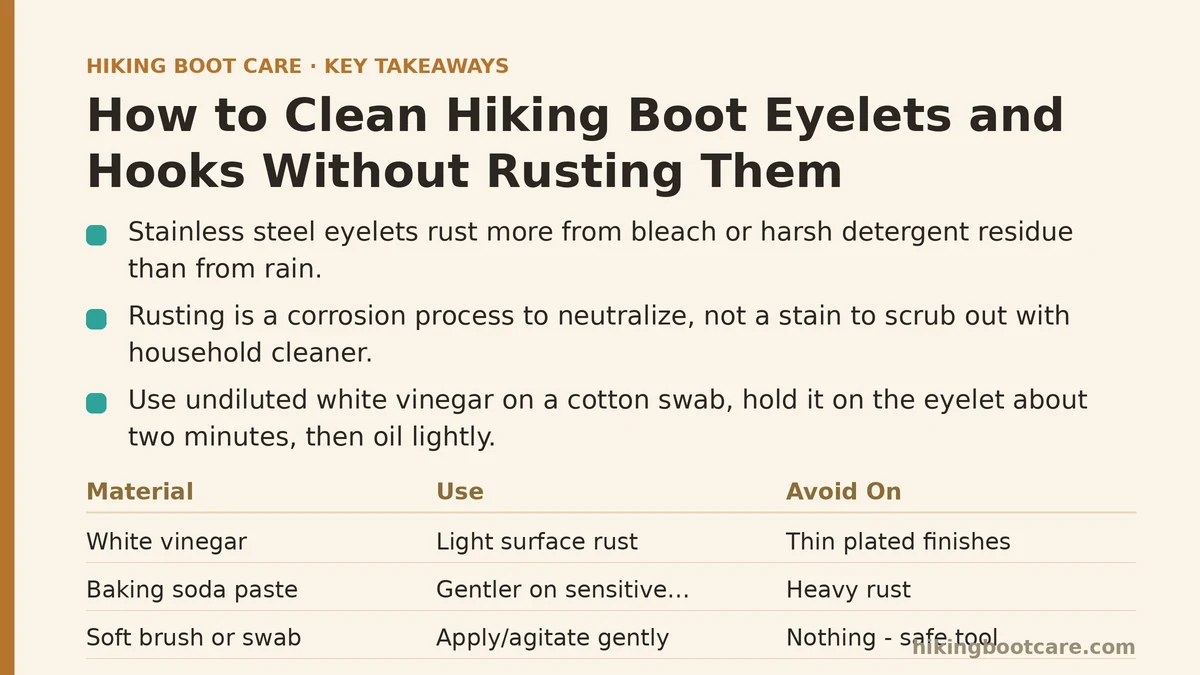
- White vinegar — mild acid, effective on light surface rust
- Baking soda — for a gentler paste on more sensitive plated hardware
- A soft-bristled brush — a nail brush or a very worn toothbrush, never a wire brush
- Cotton swabs — for working right at the edge of the eyelet where it meets the fabric
- A dry microfiber cloth
- Light machine oil or a rust-inhibiting spray — a small amount, for after cleaning
Vinegar works because its acidity dissolves the iron oxide (rust) without needing abrasive scrubbing. Baking soda works more gently, through mild alkaline action, and is the better choice on hardware with a thin plated finish that vinegar could dull with repeated use.
Round Two: The Method That Actually Worked
I soaked a cotton swab in undiluted white vinegar and held it directly against each rusted eyelet for about two minutes, letting the acid sit rather than scrubbing immediately. After that, I went over the spot with a soft brush using light circular pressure. The rust lifted almost immediately, coming away as a fine orange residue on the brush rather than staining deeper into the metal.
For the more stubborn spot near the fourth eyelet, plain vinegar wasn’t enough on its own. I mixed a small amount of baking soda with a few drops of water into a thick paste, applied it directly over the vinegar-treated area, and left it for ten minutes before brushing again. The combination — acid first, mild abrasive paste second — cleared the last of the discoloration without any visible scratching on the metal surface.
Once both eyelets were clear, I rinsed the area with a damp cloth to remove any leftover vinegar or baking soda residue. This step matters more than it looks. Leaving acidic residue on stainless steel, even mild vinegar, can restart the corrosion process within days if it isn’t fully rinsed away.
Drying and Sealing the Hardware
Rust needs moisture to form, so the drying step is where most people undo their own work. I dried the eyelets immediately with a microfiber cloth, then left the boots in a well-ventilated spot overnight rather than near a heater. Direct heat right after a vinegar treatment can warp the surrounding leather before it’s had a chance to dry evenly.
The next morning, I applied a single drop of light machine oil to each treated eyelet, working it in with a cotton swab and wiping away the excess. This left a thin, nearly invisible barrier between the metal and the moisture it would inevitably meet on the next wet trail. A dedicated rust-inhibiting spray works just as well here, applied sparingly and kept off the surrounding fabric.
Why It Happened on One Boot Only
Looking at common habits, the likely cause becomes clear. Two weeks before the rust appeared, I’d waterproofed both boots but had been noticeably heavier-handed with the spray on the right boot, catching several of the eyelets directly. Left to dry without wiping off, that residue combined with trapped moisture from the next hike and created exactly the kind of localized, damp, chemically altered environment stainless steel struggles against. It wasn’t the trail. It was five seconds of careless spraying weeks earlier.
That’s why a good permanent step is: after any waterproofing treatment, go back over every eyelet and hook with a dry cloth and wipe off whatever landed on the metal.
Checking In Three Months Later
It pays to keep an eye on those two eyelets afterward. No new rust has appeared, and the light oil coating has held up through several wet hikes and one particularly muddy river crossing in the Scottish Highlands. The left boot, treated with nothing more than the same routine oiling, remains just as clean. Consistency, more than any single product, seems to be what keeps hardware rust-free long term.
A Quick Reference for Preventing This
- Wipe metal hardware clean of any spray or wax immediately after applying waterproofing treatment
- Dry boots at room temperature, away from direct heat sources, especially around the eyelets
- Check hardware for early discoloration every few weeks rather than waiting for visible rust
- Use vinegar or a baking soda paste for cleaning, never bleach-based products or wire brushes
- Apply a light protective oil after any cleaning that removes rust
If you’ve got a pair of boots with hardware starting to show that first faint orange ring, it’s worth treating it this week rather than next month. What looks like a cosmetic mark now is corrosion actively working through the metal, and it only gets harder to reverse the longer it sits.
Related guides: Hiking Boot Care Mistakes That Cause Premature Failure (And How to Fix Them), How to Remove Mold and Mildew from Hiking Boots (Without Ruining Them), and 5 Ways River Crossings Kill Your Hiking Boots (And the Fixes That Save Them).