Mildew is a surface problem. Mold is a structural one. That distinction matters more than most boot owners realize, because the fuzzy gray-white film sitting on top of your leather usually wipes away with basic cleaning, while the dark, spotted, sometimes greenish patches that have worked into the stitching or foam midsole require a much more aggressive approach — and in some cases, they never fully leave.
Treating a mold problem like a mildew problem is how people ruin boots that were otherwise salvageable. Treating mildew like a full mold infestation, meanwhile, means dumping harsh chemicals on leather that didn’t need them. Below is a process for telling the two apart and dealing with each one properly, without shortening the life of the boot in the process.
Step 1: Figure Out What You’re Actually Dealing With
Before you clean anything, inspect the boots in good light, ideally outdoors.
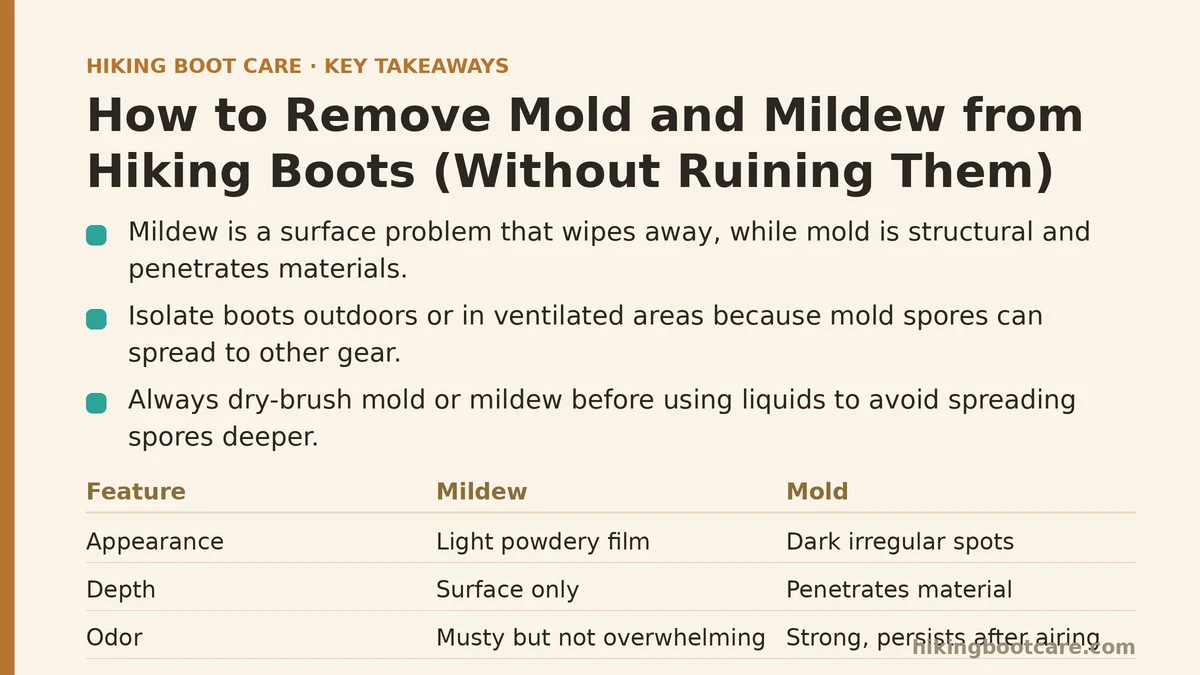
Mildew typically appears as a light, powdery, gray or white coating. It sits on the surface of the leather or fabric and can usually be brushed off dry, leaving little to no staining underneath. It smells musty but not overwhelming. Mildew forms when boots are stored damp in a low-airflow space — think a gym bag, a closed closet, or a garage with humidity swings.
Mold is darker — often black, dark green, or blue-gray — and grows in irregular spots or clusters rather than an even film. It tends to concentrate in seams, around the welt, inside the tongue gusset, and on the insole. Mold has usually penetrated into the material rather than sitting on top of it, and pressing on an affected area with a cloth will often leave a faint stain behind. The smell is stronger and doesn’t fade after airing the boots out for a day.
If you’re still not sure, do a simple test: wipe a small area with a dry cloth. If the discoloration comes away completely and the fabric underneath looks clean, you’re dealing with mildew. If a shadow or stain remains, treat it as mold and move to the stronger cleaning steps below.
Step 2: Isolate the Boots Before You Do Anything Else
Mold spores spread. If one boot has an active infestation, working on it in an enclosed space — a bathroom, a mudroom, a closet — puts the spores into the air where they can settle on other gear, clothing, or the second boot.
Take the boots outside or into a well-ventilated garage. Wear disposable gloves. If the smell is strong or you’re sensitive to mold, a basic dust mask isn’t overkill. Remove the laces and insoles immediately and set them aside — they need separate treatment and should not go back into the boot until the shell is fully clean and dry.
Lay down an old towel or a section of newspaper to work on. You’ll be brushing debris loose, and you don’t want that landing back on carpet or upholstery.
Step 3: Dry-Brush Before Introducing Any Liquid
This step gets skipped more than any other, and skipping it is a mistake. Wetting a moldy or mildewed surface before removing the loose growth just spreads spores deeper into the material and smears surface staining into a wider area.
Use a stiff-bristled brush — an old toothbrush works for seams and tight corners, a soft shoe brush for open leather or fabric panels. Brush firmly in short strokes, working the growth off the surface and onto your towel or newspaper. Pay particular attention to:
- The rand (the rubber strip around the base of the boot)
- Seam lines and stitching
- The tongue gusset, where moisture tends to sit longest
- The inside of the collar
Once you’ve brushed off everything that will come off dry, fold up the towel or newspaper and dispose of it outside rather than shaking it out indoors.
Step 4: Mix the Right Cleaning Solution for the Material
This is where mildew and mold treatment start to diverge.
For light mildew on leather or fabric, a mild solution works fine: one part white vinegar to two parts water, applied with a soft cloth, not saturated. Vinegar’s acidity kills residual spores without the harshness of bleach, and it won’t strip factory DWR treatment as aggressively as some commercial products.
For established mold, you need something stronger. Mix one part rubbing alcohol (70% isopropyl) with one part water, or use a dedicated antifungal boot spray. Alcohol kills mold effectively and evaporates quickly, which matters because you don’t want to reintroduce the moisture that caused the problem in the first place.
**Never use bleach on leather.**Wiping moldy leather with vinegar is a common desperation move, and it does kill mold — but it also breaks down the leather’s natural fibers, leaving it stiff, cracked, and prone to tearing within a few months. Bleach is only appropriate on rubber outsoles or fully synthetic mesh panels with no leather content, and even then, heavily diluted and rinsed thoroughly afterward.
Step 5: Apply, Wait, Then Wipe
Dampen a clean cloth with your chosen solution — damp, not dripping. Wipe down all affected areas, working from the least contaminated sections toward the worst spots so you’re not spreading growth into clean material.
Let the solution sit for five to ten minutes on mold-affected areas. This dwell time is what actually kills the spores rather than just moving them around. For mildew, a quick wipe is usually sufficient since you’re mostly removing surface residue at this point.
Follow with a second pass using a cloth dampened with plain water to rinse away any residual vinegar or alcohol. This prevents the solution from drying into the leather and causing stiffness later.
Step 6: Handle the Insoles and Laces Separately
Insoles are foam, and foam holds onto mold and moisture far more stubbornly than leather or synthetic uppers. Wash them by hand with a mild soap and the same diluted alcohol solution, scrubbing the underside where sweat and moisture accumulate most. Rinse thoroughly and lay them flat to dry completely before returning them to the boot — a damp insole reintroduces the exact conditions that caused the problem.
Laces can usually go straight into a mesh laundry bag in the washing machine with regular detergent, or be hand-washed with the same vinegar solution if you’d rather not risk the machine. Replace them if they show any lingering discoloration after washing; at under ten dollars a pair, it isn’t worth reintroducing spores into an otherwise clean boot.
Step 7: Dry the Boots Correctly — This Step Determines Whether It Comes Back
Drying is where most people undo all the previous work. Never use direct heat — a radiator, a heater vent, or direct sunlight — to speed things along. Heat that intense can crack leather and warp the shape of the sole, and it dries the outside of the boot faster than the inside, which traps residual moisture exactly where mold likes to regrow.
Stuff the boots loosely with newspaper or a dedicated boot dryer insert to absorb interior moisture and help the boot hold its shape. Replace the newspaper every few hours as it becomes damp. Place the boots in a well-ventilated area at room temperature — not a closed cabinet — and let them dry fully for at least 24 to 48 hours. Boots that were heavily saturated with mold growth may need closer to three full days.
Do not put the insoles or laces back in until the boot interior is completely dry to the touch, including the seams around the tongue.
Step 8: Prevent It From Coming Back
Once the boots are clean and dry, apply a fresh coat of appropriate waterproofing or leather conditioner — mold treatment strips some of the existing protective coating, and skipping this step leaves the material more absorbent than before.
Storage is the real fix, though. Mold and mildew don’t happen on the trail; they happen in the closet afterward. A few habits prevent nearly every case I’ve dealt with:
- Never store boots in a sealed bin or plastic bag, even briefly, unless they are bone dry
- Keep boots in a room with stable humidity rather than a damp basement or garage
- Use a boot dryer or stuff with newspaper after every wet hike, before storage, not just after cleaning
- Toss a moisture-absorbing packet or a small bag of silica gel into each boot during off-season storage
When It’s Time to Let the Boots Go
If mold has worked its way deep into the midsole foam, or if the smell persists after two full cleaning cycles and complete drying, the growth has likely established itself in a layer you can’t reach with a cloth. At that point, no amount of surface treatment will resolve it permanently, and continuing to wear the boots means continuing to breathe in spores with every step. It’s a frustrating outcome after a good pair has served you well, but it’s better than fighting a losing battle season after season.
Quick Reference
| Situation | Solution | Dwell Time | Key Warning |
|---|---|---|---|
| Light mildew, surface only | 1:2 vinegar-water | 1-2 minutes | Brush off dry residue first |
| Established mold, leather | 1:1 rubbing alcohol-water | 5-10 minutes | Never use bleach on leather |
| Mold on rubber/synthetic only | Diluted bleach (small amount) | 5 minutes, rinse well | Keep away from leather panels |
| Insoles | Mild soap + alcohol solution | Hand wash, rinse fully | Must dry completely before reuse |
| Persistent odor after 2 treatments | Deep-set in midsole foam | N/A | Consider retiring the boot |
Mold and mildew are almost always a storage failure rather than a hiking one. Get the boots properly dry before they go back in the closet, and this is a problem you’ll rarely have to deal with twice.
Dealing with a stubborn case that isn’t responding to these steps? Describe what you’re seeing in the comments — material, location on the boot, how long it’s been there — and the appropriate next step can be suggested.
Related guides: How to Remove Salt Stains from Hiking Boots, 5 Ways River Crossings Kill Your Hiking Boots (And the Fixes That Save Them), and How to Clean Hiking Boot Eyelets and Hooks Without Rusting Them.